
Work Injury
What is a Work Injury?
A work injury that entitles the injured person to a work injury benefit is a work accident or occupational disease, as defined in the National Insurance Law. A work injury results from any
work-related event that causes a need for medical treatment and time away from work.
8 Common Causes of Work Injury
Lifting
Many employees are prone to spraining, straining, or tearing a muscle by lifting an object too heavy to lift on their own. Remember that there is no harm in asking for help with things that are difficult to lift.
Dehydration
Not staying hydrated can also bring about disastrous consequences. Failing to drink adequate water on exceptionally hot summer days can cause heat stroke or cardiac conditions. It can be avoided by drinking at least eight glasses of water daily. Management should stress the importance of proper hydration and rest, as it maximizes the efforts of personnel.
Hazardous Materials
Improper handling of hazardous materials or not wearing personal protective equipment (PPE) is another common cause of accidents in the workplace. Reading material safety data sheets and providing the appropriate protective attire can prevent workplace incidents.
Trips and Falls
Slick floors and high-traffic corridors can cause a trip or fall. Improper footwear may also contribute to these accidents, which can result not only in injuries but also in worker's compensation-related cases. Read 6 Guidelines to Prevent Workplace Slips, Trips, and Falls for more advice.
Fatigue
Failing to take a break is another common cause of accidents. To recover from grueling manual labor, employees must take adequate breaks. Not doing so can lead to many physical issues, including atrophy and general exhaustion. The results can be far more devastating than taking a 10-minute breather.
Poor Lighting
Inadequate lighting is responsible for many accidents each year. It is often overlooked when attempting to prevent accidents in the warehouse or workplace.
Acts of Workplace Violence
Sadly, violence among co-workers has become all too common. Office politics or other sensitive issues usually bring it about. Integrating conflict resolution and peer mediation can help to reduce the risks of such outbursts.
Stress
Stress is one of the leading causes of death. It affects the human body in every facet imaginable. Stress can foster adverse effects physiologically, emotionally, and mentally and debilitate or distract any worker. Therefore, it is essential to encourage a supportive team environment.
Common Types of Workplace Accidents
Car accidents at work
A car crash may be considered a workplace accident when workers are driving as part of their duties. It includes driving between the employer's worksites, driving to a client site, or even driving out of town to attend a work-related function. A car accident is usually not considered work-related when an employee goes to or from home, moves to or from lunch or another meal break, or drives while attending to personal errands during the workday.
Falls from heights
A worker may suffer a fall from heights such as roofs, scaffolding, cherry picker or scissor lifts, or gangways. These accidents may occur due to slippery conditions, poor lighting and visual obstructions, adverse weather conditions, and the lack of safety equipment such as railings, fencing, or harnesses.
Electrocution
Construction, repair, and utility workers face higher risks of electrocution. However, other workers may be electrocuted due to defective equipment or machinery or dangerous conditions at the job site. Electrocutions can cause burn injuries in addition to internal organ damage. In many cases, electrocution can prove fatal.
Struck by an object
A worker can be struck and injured when an object falls from a height, such as a roof, shelving, or a crane or lift. Sometimes, a worker may be struck when an entire structure falls, such as shelving, scaffolding, or a wall collapsing. In other scenarios, a worker may be struck by negligently operated equipment, such as a forklift.
Entanglement
An entanglement accident occurs when a part of the worker's body gets caught in equipment or machinery. Entanglement accidents often result in bone fractures, soft-tissue injuries, crush injuries, or even traumatic amputation, where the accident severs the affected part from the victim's body. The injuries suffered in an entanglement accident can lead to permanent disability.
Slip and falls at work.
Slips and falls represent one of the most common types of workplace accidents. Adverse weather or poor workspace maintenance can lead to a slip-and-fall accident at work.
Repetitive stress injuries
A repetitive stress injury occurs when a worker is required to perform the same physical motion multiple times over an extended period during the workday, for numerous workdays on end. These injuries are common in the construction, manufacturing, and agricultural industries. But retail and office workers can also experience repetitive stress injuries. If left untreated, repetitive stress injuries can result in long-term or permanent structural damage to the affected body parts.
Overexertion injuries
A worker may succumb to overexertion when engaging in heavy physical labor for an extended period, often in hot or humid conditions. Overexertion represents a common incident in construction, manufacturing, warehousing, and agricultural industries. Overexertion can lead to severe medical conditions such as dehydration or heat stroke.
Struck against an object
When a worker is struck against an object, they can suffer crush injuries, including broken bones, soft-tissue damage, spinal injuries, head injuries, or internal organ damage. Limbs that suffer crush injuries may ultimately require amputation.
Violence at work
Employees, unfortunately, may face risks of becoming victims of violence at the workplace. Violence and criminal activity can lead an employee to suffer many kinds of injuries of varying severity, in addition to mental and emotional injuries such as PTSD, anxiety, and depression. It includes assaults or shootings committed by co-workers or assaults or crimes perpetrated by customers or members of the public.
How to Treat Work Injury
Step 1: Have a Plan in Place for Incidents
Step 2: Respond Immediately With Emergency Action

It is the first step immediately after an employee reports or experiences a work injury. If you have an incident response plan in place, follow it. The following tips may help:
- Try to gauge what caused the incident to ensure no one else is in immediate danger. If the area is still dangerous, ensure everyone except trained personnel with safety gear stays clear.
- Try to give the injured worker some space by moving them to a quiet place if it’s safe for them to move or clearing the area if driving is not secure.
Step 3: Report the Work Injury to the Relevant Authorities

Step 4: Investigate the Incident

Step 5: File a Workers' Comp Claim if Required
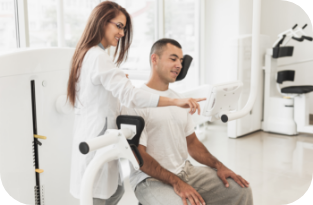
Treating your work injury with physical therapy
Work presents unique opportunities to sustain an injury. Every job has specific risks, from strains and pulled muscles caused by heavy lifting to repetitive motion injuries in the office. No matter how many precautions a company may take, work injuries still occur.
You spend a lot of time at work, doing the same things many times per day.
A physical therapist will perform a physical evaluation at your consultation to determine the best treatment for your needs.
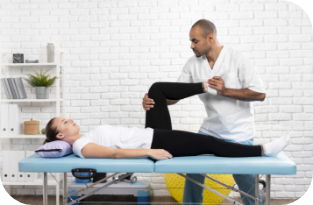
Physical therapy is a safe, easy, and natural way to recover from a work injury quickly. Treatments may include any specialized method our physical therapist deems fit, including ultrasound, ice and heat therapy, electrical stimulation, or laser technology. From there, an individualized treatment plan will be designed to help you recover as soon as possible.
In fact, in many cases, PT treatments have even been known to eliminate the need for harmful pain-management drugs or even the need for surgical intervention!
Physical therapy can help you regain your strength and flexibility after an injury. There are several specific techniques a physical therapist may use during your treatment. These might include massage therapy, ice/heat therapy, ultrasound technology, and electrical stimulation.
In addition to conservative treatment, a physical therapist may utilize various modalities, such as ultrasound therapy or soft-tissue massage, to correct the problem.
Physical therapy also goes beyond this to educate you on avoiding additional injuries by practicing healthy movement habits. Learning how to do your task without injuring yourself might take some time.
How much time does the injury need to heal?
Frequently Ask Questions
Providing concierge physical therapy services at your home, office or gym customizing each session to be what your body needs today.
01

What is a work injury?
02
What is a significant injury at work?
03
What are the three types of injury?
04
What causes injury?
05