
Back Pain
Causes Of Back Pain
Back pain often develops without a cause that shows up in a test or imaging study. Conditions commonly linked to back pain include:
Muscle or ligament strain.
Repeated heavy lifting or a sudden awkward movement can strain back muscles and spinal ligaments. For people in poor physical condition, constant strain on the back can cause painful muscle spasms.
Bulging or ruptured disks.
Disks act as cushions between the bones in the spine. The soft material inside a disk can bulge or rupture and press on a nerve. However, a bulging or ruptured disk might not cause back pain. Disk disease is often found on spine X-rays, CT scans or MRIs done for another reason.
Arthritis.
Osteoarthritis can affect the lower back. In some cases, arthritis in the spine can lead to a narrowing of the space around the spinal cord, a condition called spinal stenosis.
Osteoporosis. .
The spine's vertebrae can develop painful breaks if the bones become porous and brittle.
Ankylosing spondylitis,
It is also called axial spondyloarthritis. This inflammatory disease can cause some of the bones in the spine to fuse. This makes the spine less flexible.
Types of Back Pain
- Acute back pain happens suddenly and usually lasts a few days to a few weeks.
- Subacute back pain can occur suddenly or over time, lasting 4 to 12 weeks.
- Chronic back pain may come on quickly or slowly, lasts longer than 12 weeks, and occurs daily.
Why Physical Therapy?
Physical therapy can be a holistic alternative to surgery, medication, and other treatment methods, especially if you’re experiencing lower back pain for the first time.
Physical therapy as a first step after experiencing acute low back pain decreases the long-term need for surgery or medications.
Physical Therapy Treatment Plan for Lower Back Pain
The goal for your physical therapy visits
Physical therapy can positively impact your life, especially if you are dealing with a condition like lower back pain. Goals for the physical therapy include:
- Decreasing pain
- Increasing function
- Learning how to keep your back healthy long-term

Physical therapy sessions

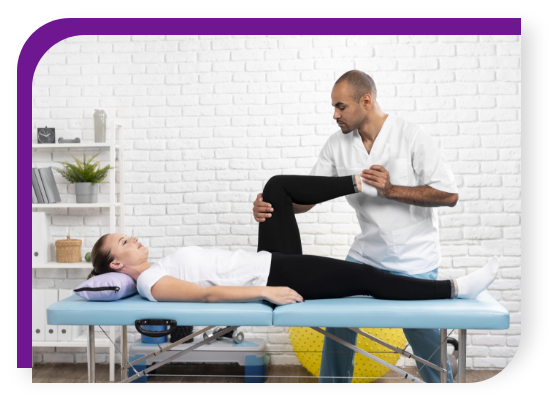
Modalities that your physical therapist may use to treat your lower back pain include:
- Hot or cold packs (for acute pain)
- Transcutaneous electrical stimulation (TENS) is a therapy that uses mild electrical waves to help muscles and nerves recover.
- Spinal manipulation to relieve pain and improve spinal mobility
- Exercises to strengthen your abdominal and pelvic floor muscles (core) to support your back better, relieve pain, and improve movement
- Exercises to strengthen abdominal, gluteal, and quadriceps muscles (flexion exercises) to decrease stress on the lower back
- Stretching exercises to improve range of motion and mobility
- Low-impact aerobic exercises (stationary bike, treadmill, bicycling, water therapy) to increase endurance
Duration of Physical Therapy Session
Each MOTION appointment lasts 40 minutes, longer than a typical Physical Therapy session. Longer sessions allow our therapists to provide more one-on-one time with each client.
Benefits of Physical Therapy
Personalized Care.
One of the main benefits of seeking help from a physical therapist is that he or she will not perform a one-size-fits-all approach. They will consider your body type, age, lifestyle (whether you’re typically a sedentary person or an athlete), existing health conditions, and how you respond to different types of movement.
Restored mobility.
Physical therapists not only treat pain, they also look for the root cause of discomfort. For example, if your lower back is stiff, the therapist will focus on easing that stiffness. If your back muscles are weak, the therapist may recommend strengthening exercises that will aid in recovering your entire range of motion.
Reduces the risk of further injury.
Suppose you must do repetitive movements due to your job duties or athletic activity. Your physical therapist will consider such movements and suggest recovery stretches to avoid future back injuries.
Decreased pain.
Physical therapy will examine your gait (how you move when you walk/run) and how you get up from sitting and lying down. This allows them to suggest exercises that will diminish the pain that’s directly caused by your movements. The therapist may also use electrical stimulation to restore function.
It may eliminate the need for surgery.
Surgery should only ever be considered as a last resort, and physical therapy is one of the most proactive ways to attempt to resolve back pain conservatively.
Reduces the risk of falls.
If you have poor posture or a degenerative disease that increases the likelihood of falling a physical therapist will design a plan to improve your balance and coordination. To be best prepared, list possible factors contributing to your pain, including job duties, sports, stressful life events, any recent injuries, falls, or accidents, and family history. Your physical therapist will work with you to determine a program that best suits you.
Frequently Ask Questions
Providing concierge physical therapy services at your home, office or gym customizing each session to be what your body needs today.
01

I’ve Been Referred To Physical Therapy. Isn’t There Else My Doctor Can Do?
02
How Long Will The Lower Back Pain Last?
03
Will Lower Back Pain Come Back?
04
Which Exercises Or Activities Should I Avoid With Lower Back Pain?
05
What is physical therapy for back pain?
06
Does physical therapy help arthritis in the back?
07